A story of photography · 1826–2026
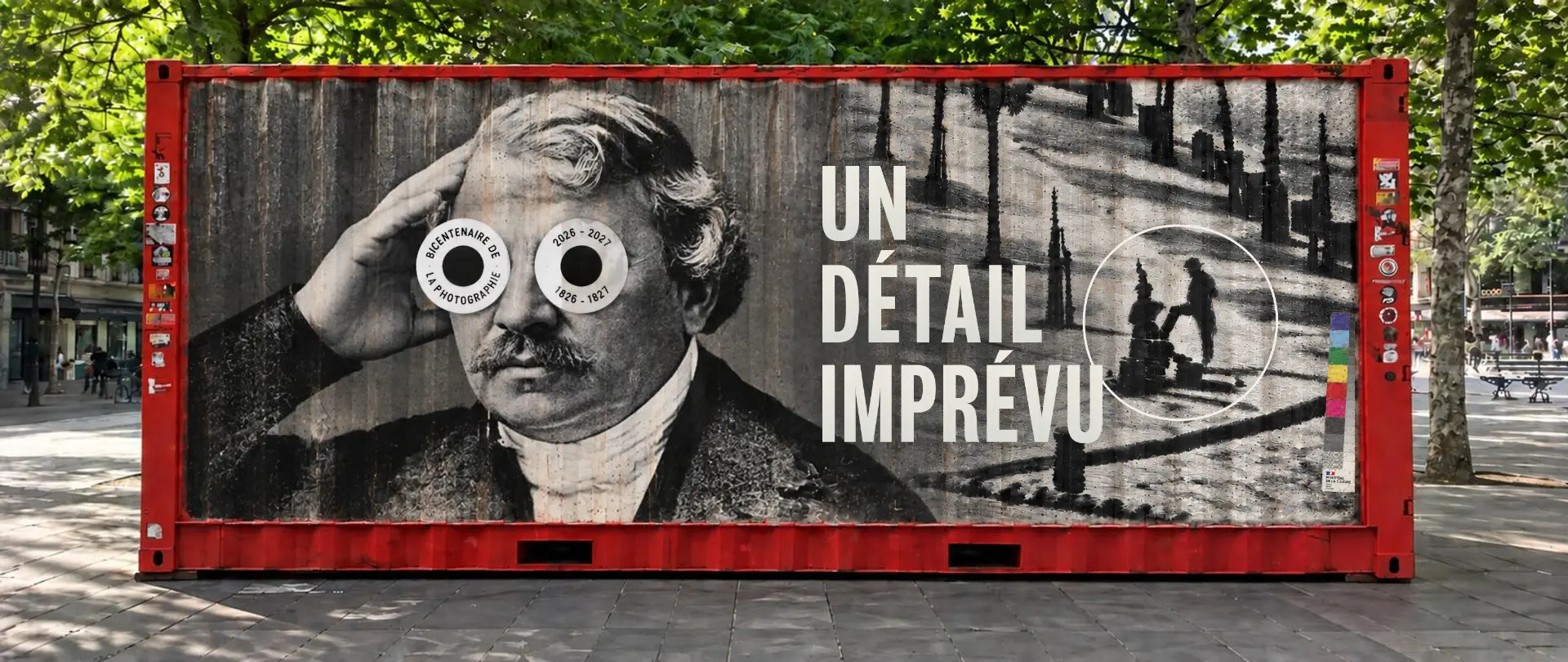
An unexpected detail
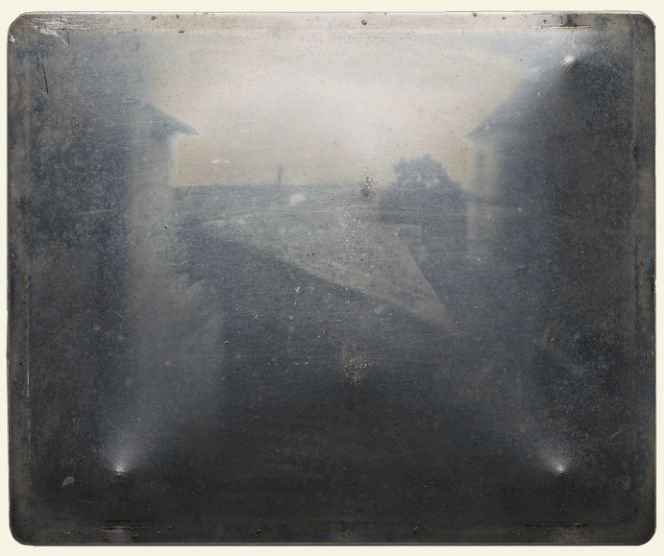
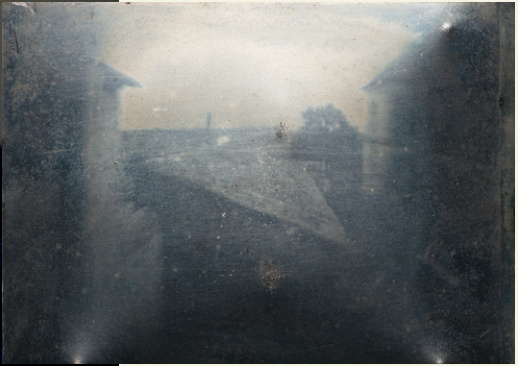
In 2026, photography celebrates its 200th anniversary. It was in 1826 that Nicéphore Niépce created a new kind of image on his estate in Burgundy. Using a camera obscura, he fixed the view from his window onto a pewter plate. Titled View from the Window at Le Gras and considered the first photograph, this image is now preserved in Austin, Texas.
Kalle Boman, Axel Danielson & Maximilien Van Aertryck
Joseph Nicéphore Niépce, “View from the Window at Le Gras”, 1826 (reversed)
“This invention, in which a will to explore and the magic of light were intertwined, has revolutionized our world, profoundly changing the spirit and nature of its representations and creating a new relationship to reality.”
Excerpt from the Bicentenary of Photography manifesto, written by the scientific committee
Contents
09 chaptersAn unexpected detail
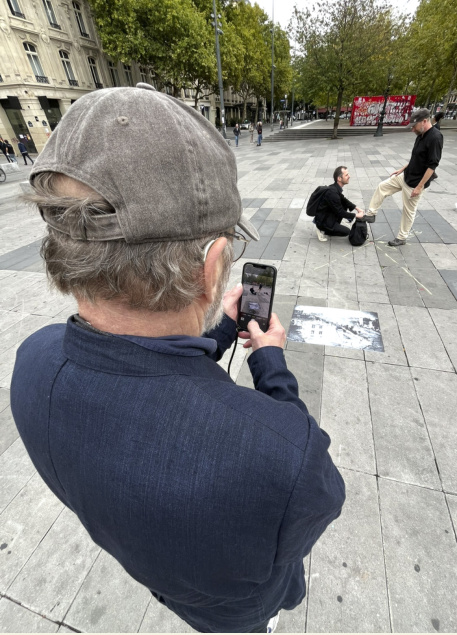
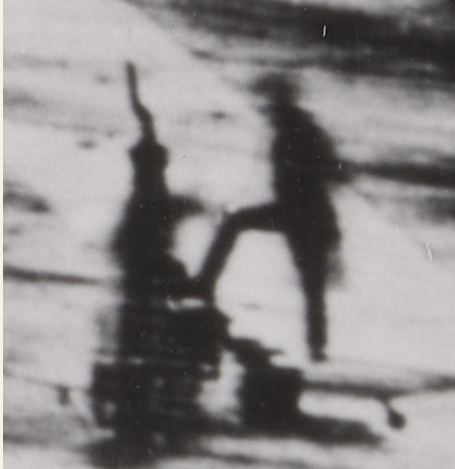
One spring morning in 1838, the inventor Louis Daguerre stood at the window of his studio and pointed his camera at the view before him. On the Boulevard du Temple, it was rush hour. But the exposure time, lasting several minutes, could not capture the bustle of Paris. When the image appeared on the silvered plate, Daguerre discovered an unexpected detail: a bootblack and his customer, who, by chance, had remained still enough. These two unknown men are thought to be the first human beings to appear in a photograph. You now stand at the exact spot where they were immortalized that morning.
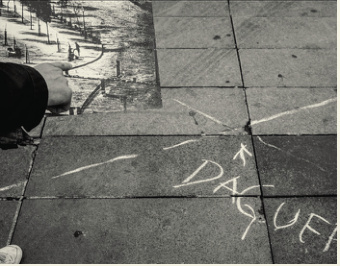
Kalle Boman, Axel Danielson & Maximilien Van Aertryck, August 2026
Identification of the site, 2025.
Camera obscura
“Light that passes through an opening and reaches a surface can, under certain circumstances, be perceived by a human being as an IMAGE of the matter situated in front of the opening.”
Excerpt from “What is an IMAGE?”, Visuell praktik, 2014
Principle of the camera obscura. Engraving, 18th century.
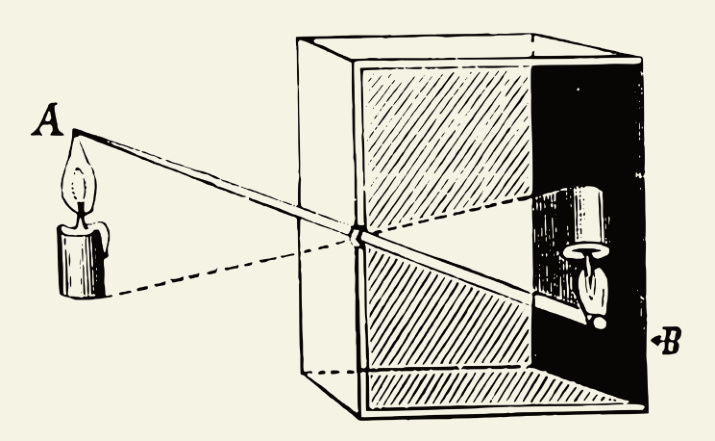
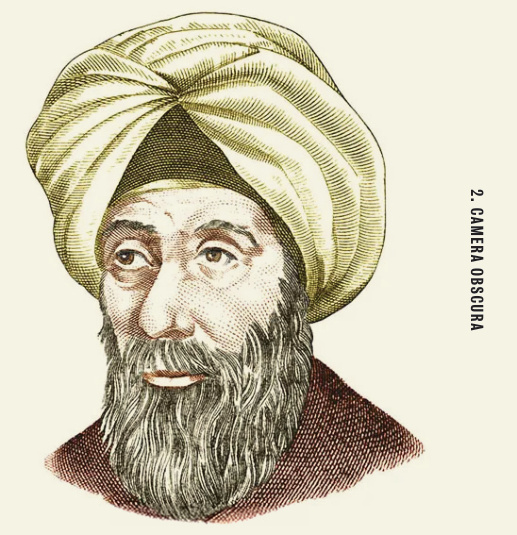
The principle of the camera obscura has been known at least since the Chinese philosopher Mozi in the 5th century BC. About 1,400 years later, the Arab-Persian scientist Ibn al-Haytham, known in the West as Alhazen (c. 965–1040), established its scientific foundations through systematic experiments on light and image projection. Alhazen studied the reflection of light and showed that vision occurs when light enters the eye, rather than emanating from it as rays, as was then believed. Through geometry and experimentation, he turned the camera obscura into a tool for understanding light and vision.
“Light emanates from every illuminated body, and each of its points radiates in all directions.”
Alhazen, Book of Optics, 11th century
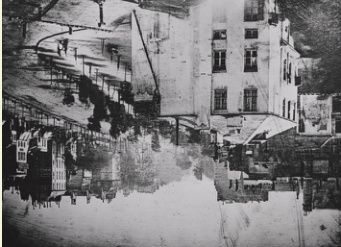
The image here has been turned the right way up, but remains reversed from left to right. This was the case with the first daguerreotypes, and it is in this form that Daguerre’s image has most often been reproduced.
In a camera obscura, light enters through a small hole and is projected onto the opposite wall. Because it travels in a straight line, the rays cross as they pass through the opening: light coming from the top of the subject reaches the bottom of the wall, and light from the left reaches the right.
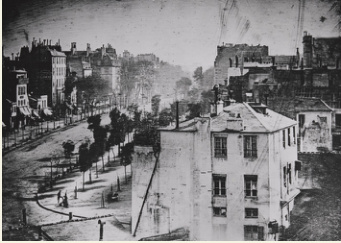
Attempted reconstruction of the Boulevard du Temple at the moment the photograph was taken, using artificial intelligence.
This time, the image is reversed from left to right and thus regains its true orientation: the “detail” is on the right of the image.
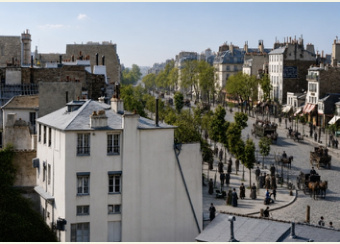
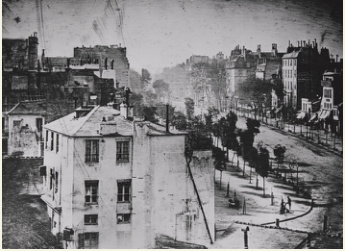
The detail
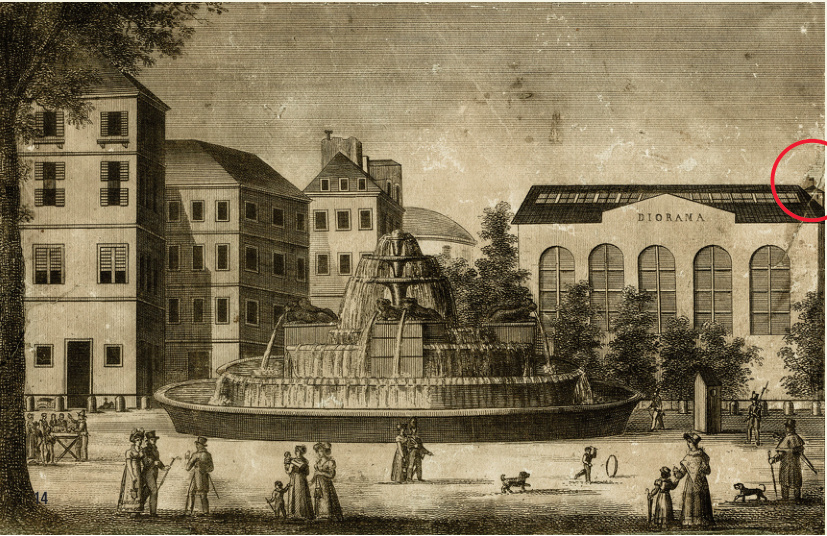
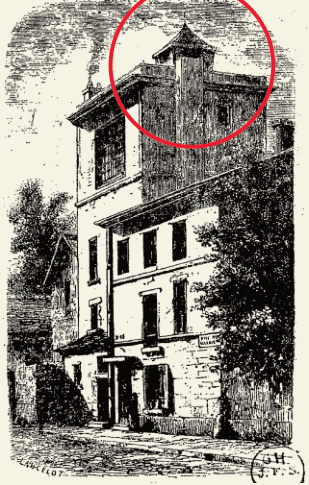
Louis Daguerre was a painter and theatrical set designer. In 1822, he opened the Diorama in Paris, a theatre where immense painted sets transformed before the audience through the use of light. His house and studio were right next door.
Daguerre’s house, at no. 5 Rue des Marais. The Diorama, near the Château-d’Eau in Paris, early 19th century. Engraving.
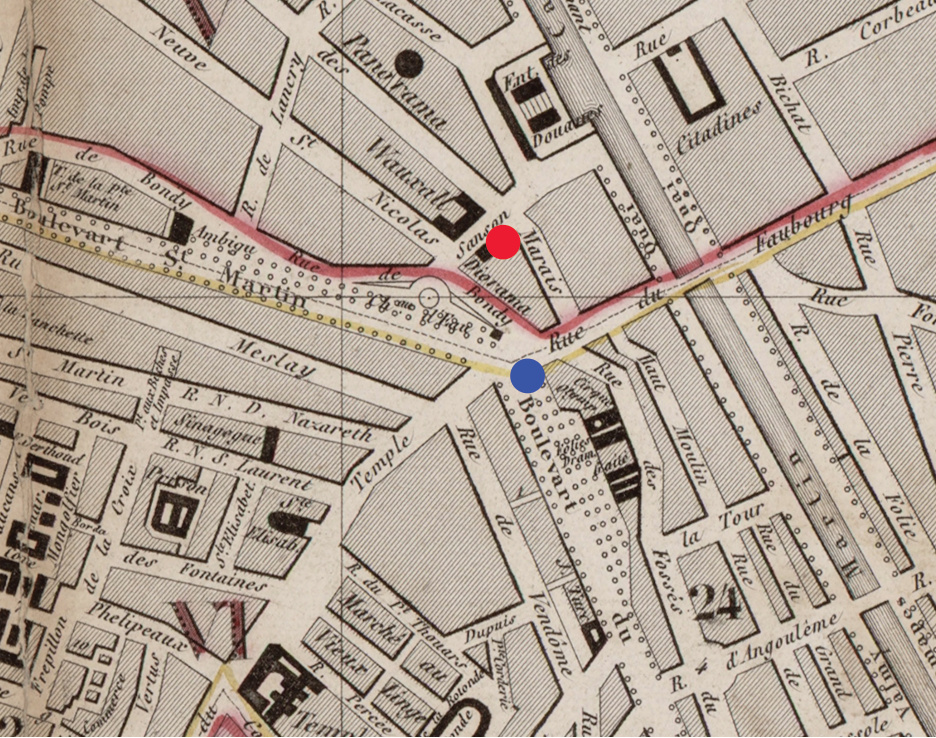
Map of the area around the Boulevard du Temple, 1839. The markers indicate Daguerre’s studio and the camera position, as well as the spot where the bootblack and his customer stood when the photograph was taken.
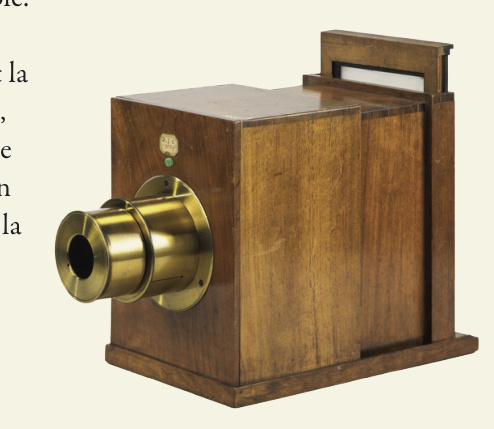
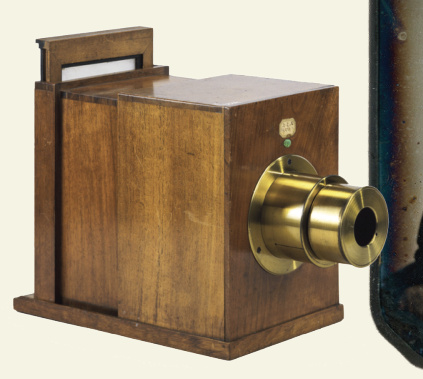
One of the first daguerreotype cameras. Musée des Arts et Métiers,
Paris
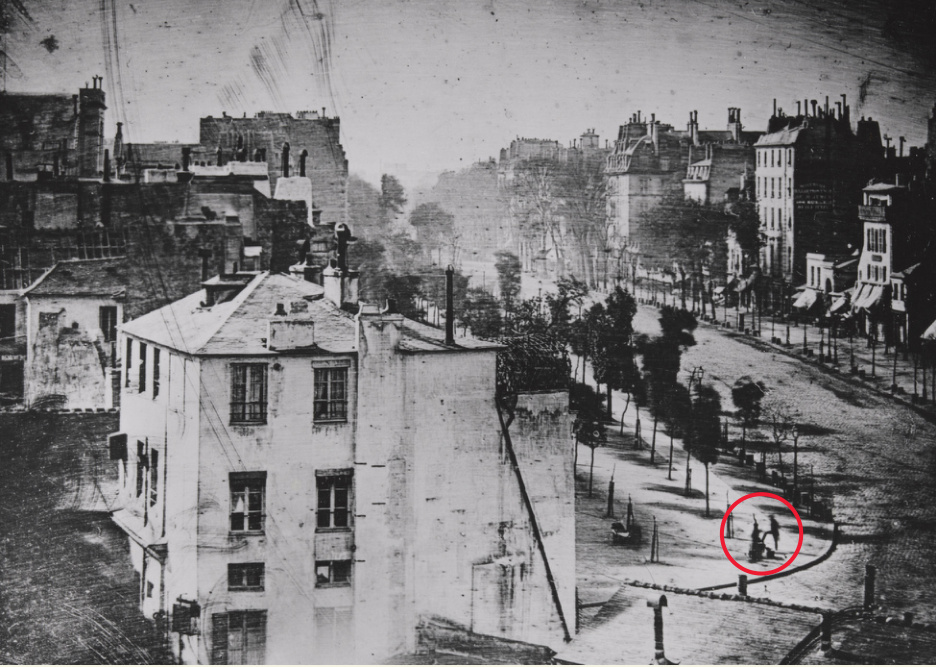
This image is part of a series of tests made by Daguerre, who photographed the same view from his studio window at different times of day. He titled this image “Eight O’Clock in the Morning”.
The detail.
Louis Daguerre, Boulevard du Temple, 1838.
Fixing the image
Chevalier’s shop, engraving.
In the 1820s, a famous family of Parisian opticians kept a shop at 69 Quai de l’Horloge. Both Niépce and Daguerre ordered lenses from Chevalier for their experiments aimed at fixing the image produced by the camera obscura. Charles Chevalier decided to put them in touch. This meeting led to a decisive collaboration between Niépce and Daguerre, from 1829 to 1833.
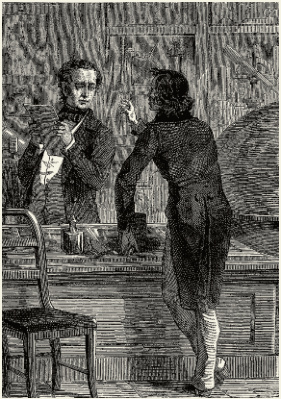
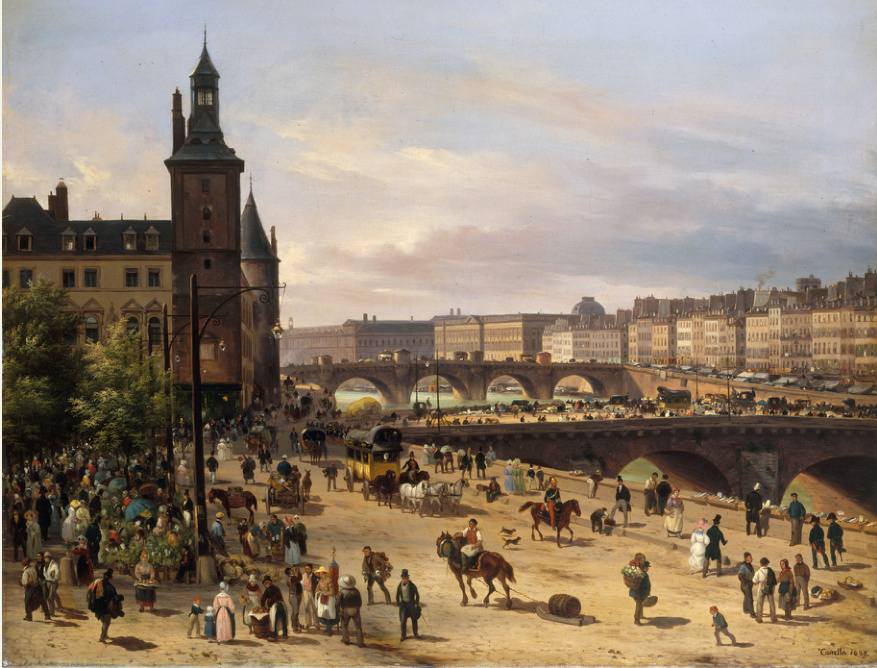
Giuseppe Canella, The Quai de l’Horloge, 1832. Musée Carnavalet, Paris. At bottom right, a bootblack and his customer.
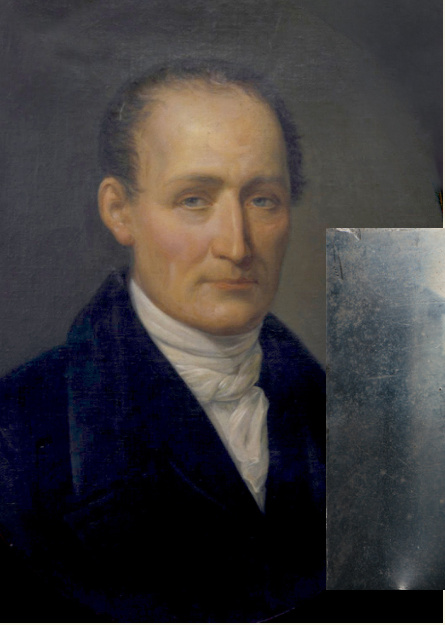
Portrait of Nicéphore Niépce and his View from the Window at Le Gras, 1826.
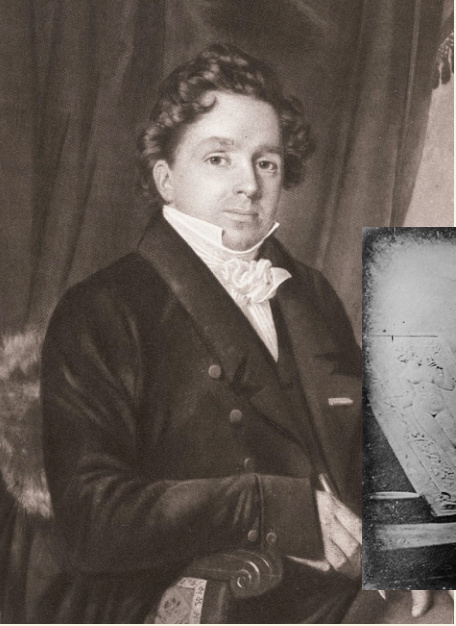
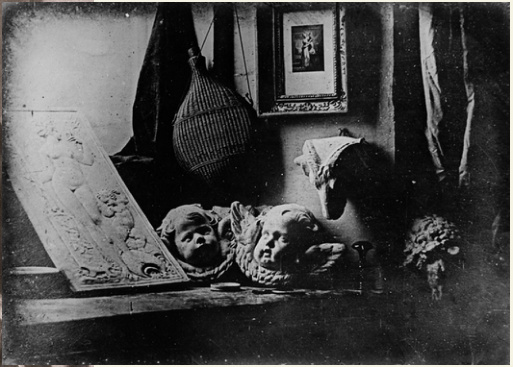
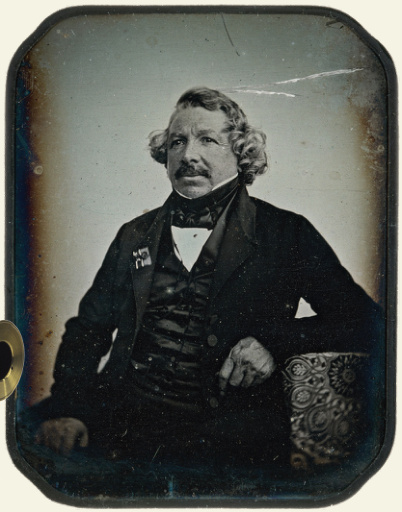
Portrait of Louis Daguerre and his oldest surviving daguerreotype, 1837.
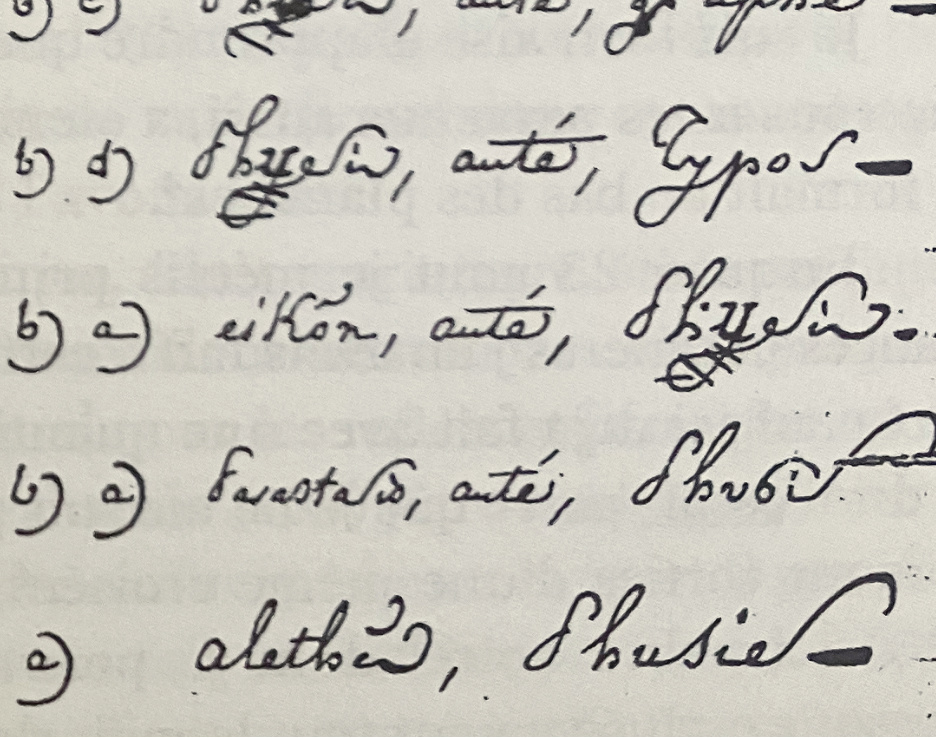
In their correspondence, Niépce and Daguerre drew on Greek to find words to describe what they were inventing. Nature itself (physis) leaves an imprint (typos), writes (graphé) its own (auté) true (aléthès) image (eikón). No human hand intervenes.
Facsimile of a letter from
Daguerre to Niépce, correspondence 1829–1833.
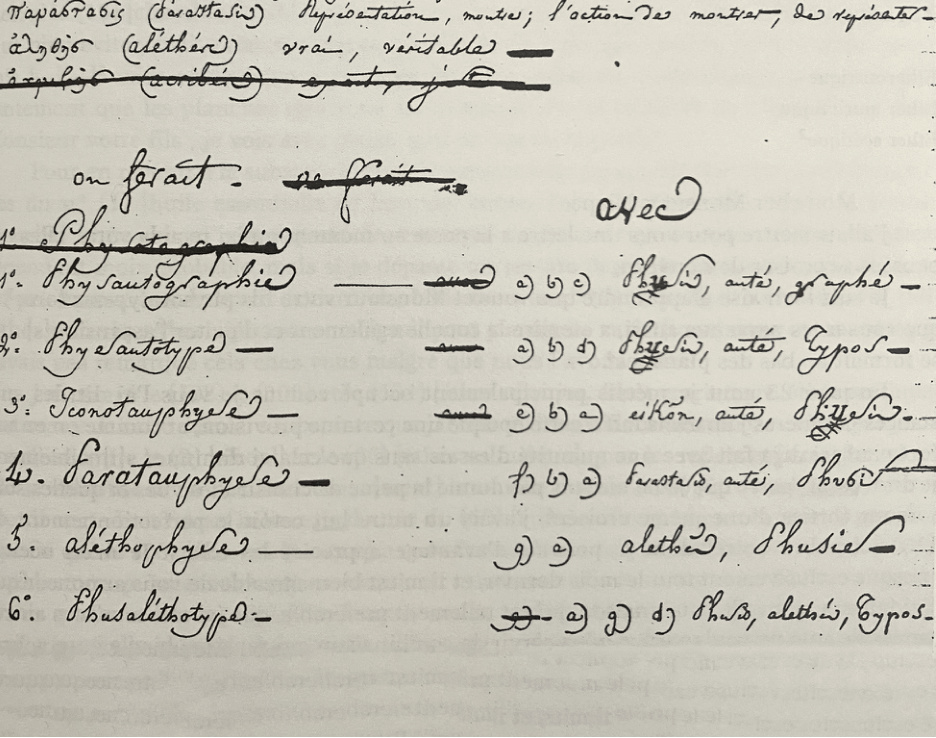
From these Greek words, Niépce and Daguerre sought to coin a new word to name their invention.
Physautographie — physis: nature; autós: oneself; graphê: writing
Physautotypie — physis: nature; autós: oneself; typos: imprint
Iconautophyse — eikôn: image; autós: oneself; physis: nature
Paratauphyse — parastasis: representation; autós: oneself; physis: nature
Aléthophyse — aléthès: true; physis: nature
Phusaléthotype — physis: nature; aléthès: true; typos: imprint
March 1839
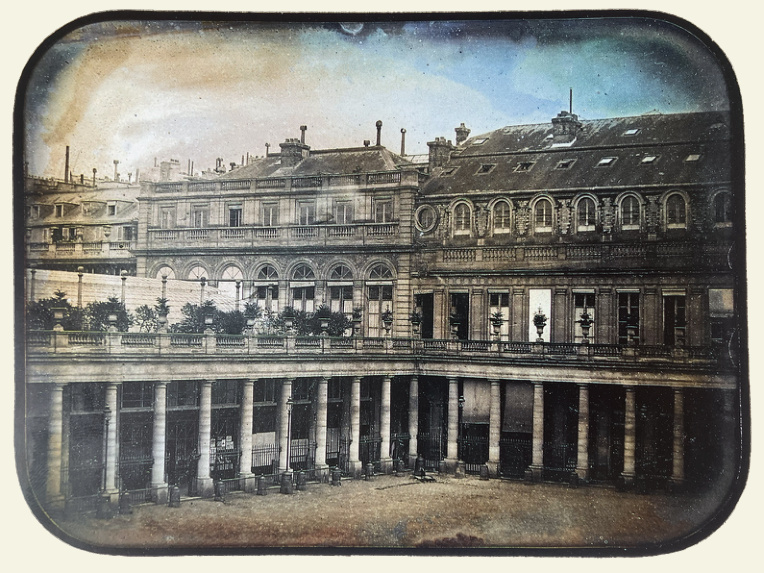
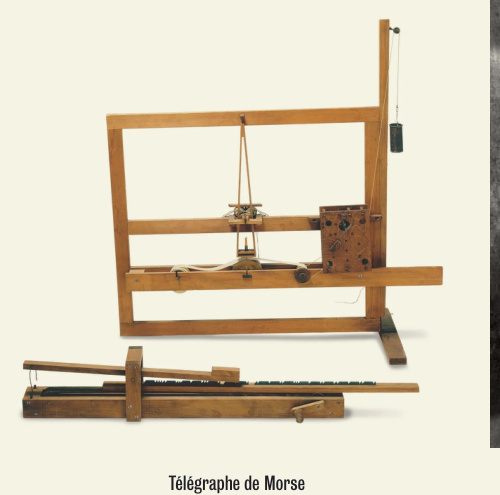
On 8 March 1839, Daguerre and Samuel Morse met in Paris and presented their inventions to one another: the daguerreotype and the telegraph. A trained portrait painter, Morse examined the plates with a magnifying glass and was left speechless by the richness of their details.
He would later describe these images as “Rembrandts perfected”, stressing that the shop signs, window details and even the leaves on the trees could be seen with perfect sharpness.
Louis Daguerre, The Palais-Royal, 1839–1840, National Technical Museum, Prague.
Daguerreotype camera. Portrait of Louis Daguerre.
Morse’s telegraph. Portrait of Samuel Morse.
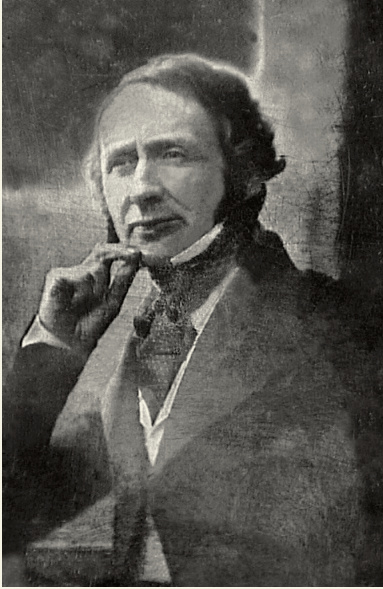
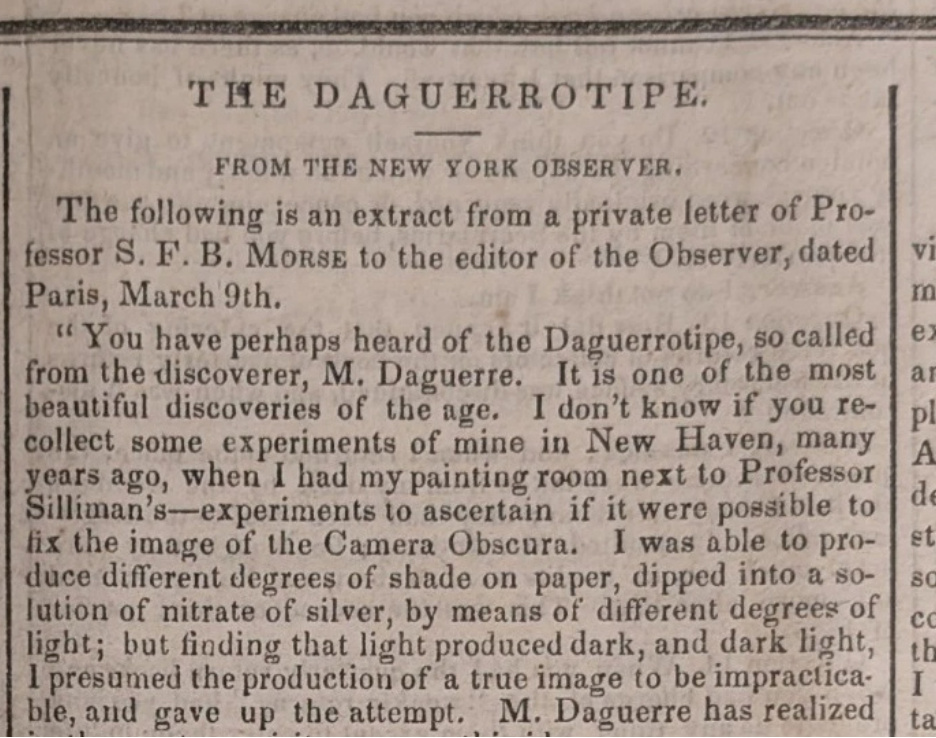
Morse wrote to his brother Sidney, owner of the New York Observer, who published his letter on 20 April 1839:
“Objects in motion are not impressed. The boulevard, usually filled with a bustling crowd of pedestrians and carriages, was perfectly deserted, with the exception of an individual who was having his boots polished; his feet, of course, had to remain still for some time, one resting on the bootblack’s box, the other on the ground.”
Facsimile of an article from the American press.
A gift to the world
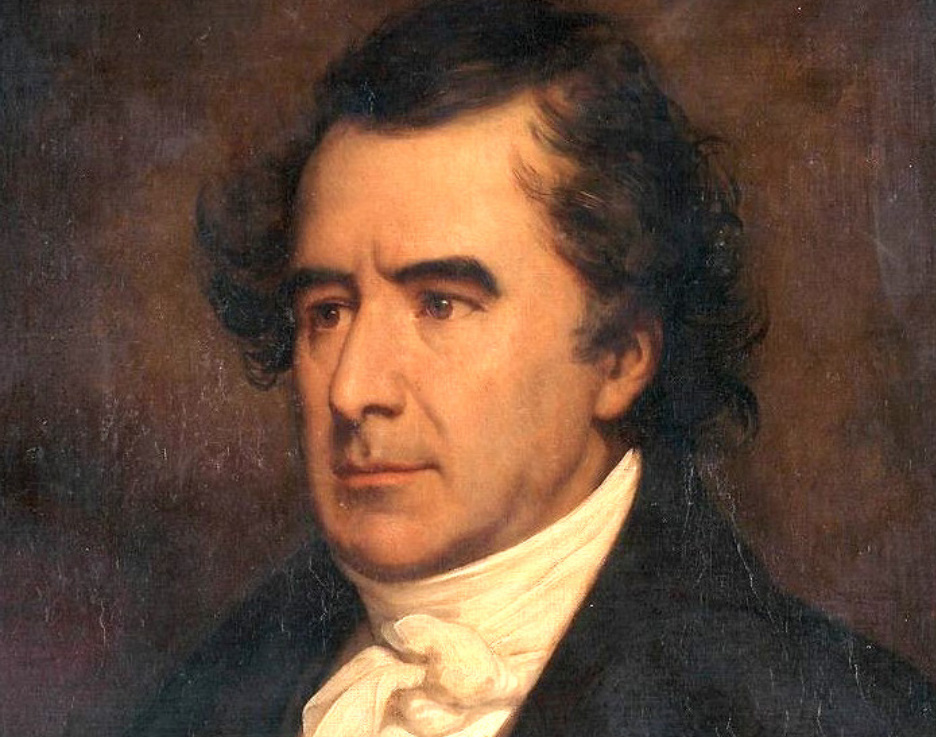
At first, Daguerre did not know what to do with his invention. He considered selling the apparatus to wealthy individuals, who could then photograph their châteaux and country houses. His meeting with François Arago (1786–1853) and Arago’s vision changed everything.
An astronomer, physicist and member of parliament, Arago immediately understood that the daguerreotype was far more than a curiosity: it was a scientific instrument whose full significance no one could yet measure.
Portrait of François Arago.
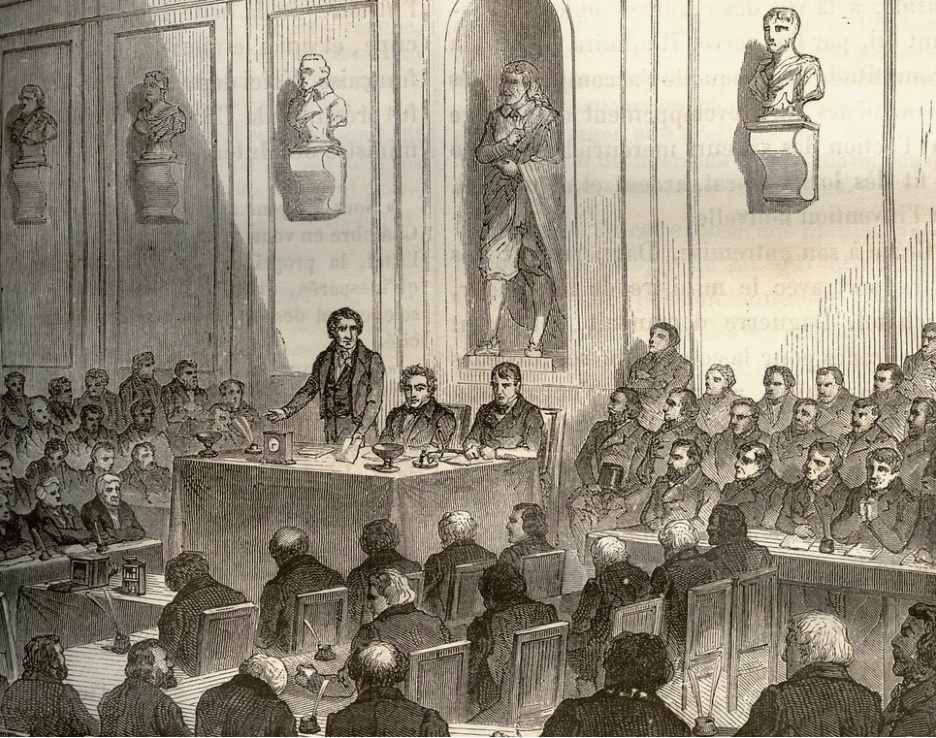
In his speech before the Chamber of Deputies on 3 July 1839, Arago stressed that no one could yet know where photography’s discoveries would lead humanity.
“When observers apply a new instrument to the study of nature, what they had hoped from it is always small compared to the succession of discoveries of which the instrument becomes the origin. In this regard, it is on the unexpected that one must particularly count.”
Arago before the Chamber of Deputies, 3 July 1839. Engraving.
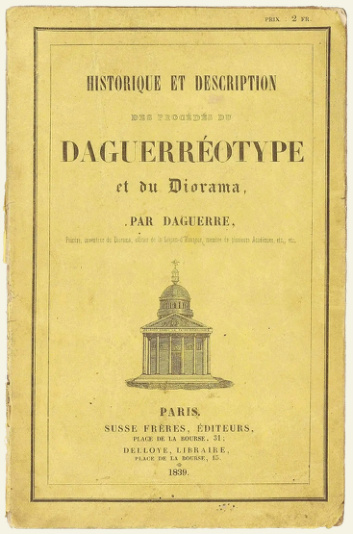
Thanks to Arago, the French State acquired Daguerre’s invention, granted him a lifetime pension and made the secrets of the process freely accessible to the whole world. The history of the invention, instructions for building a daguerreotype camera and the necessary chemical formulas were published as a book.
Only a few months after the public presentation of the invention, History and Description of the Processes of the Daguerreotype and the Diorama was translated and published in many languages.
Louis Daguerre’s manual on the daguerreotype, 1839.
Samuel F. B. Morse, “Portrait of a Young Man”, 1840.
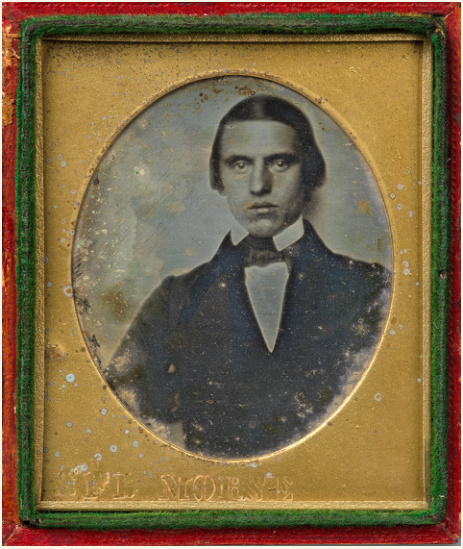
The daguerreotype spread rapidly in the United States, notably thanks to Morse. His letter introduced the invention to the American public and was reprinted by two hundred newspapers across the country. Morse became one of the first photographers in the United States. He opened a studio and also began teaching the process. It was in the United States that photography quickly found its first major market: the portrait.
The index
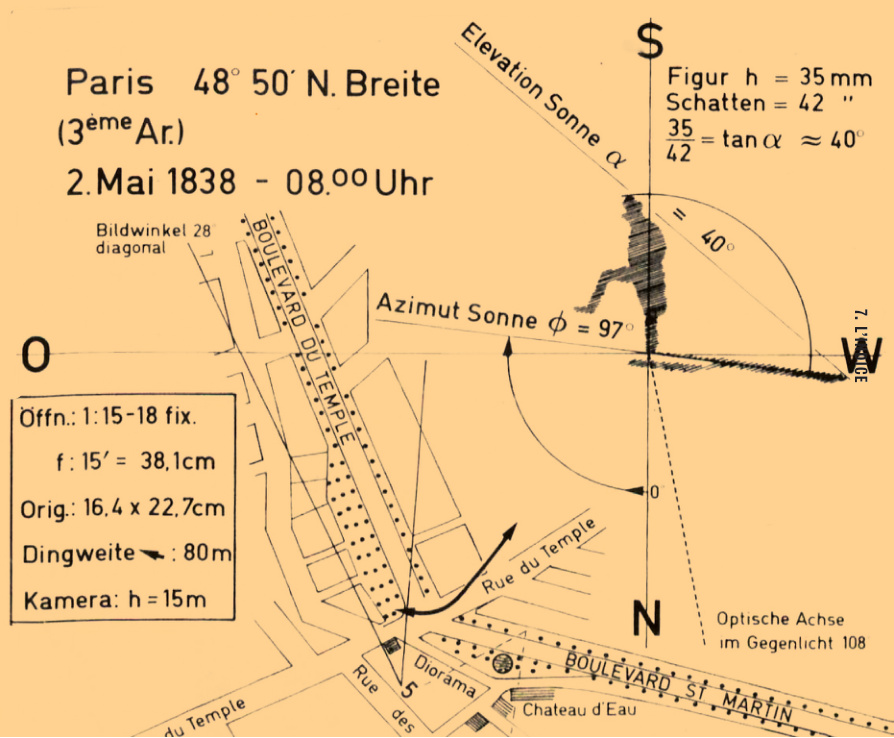
Every photograph is indexical: it preserves a physical trace of a precise place and moment. The light that was actually there, at that instant, struck the film, plate or sensor and left an imprint. In 1983, Peter von Waldthausen dated Daguerre’s image with the help of the Zeiss Planetarium in Berlin. From the height of the silhouette on the plate, the length of its shadow and the position of the sun, he arrived at the date of 2 May 1838.
Waldthausen’s calculations to determine
the moment the photograph was taken.
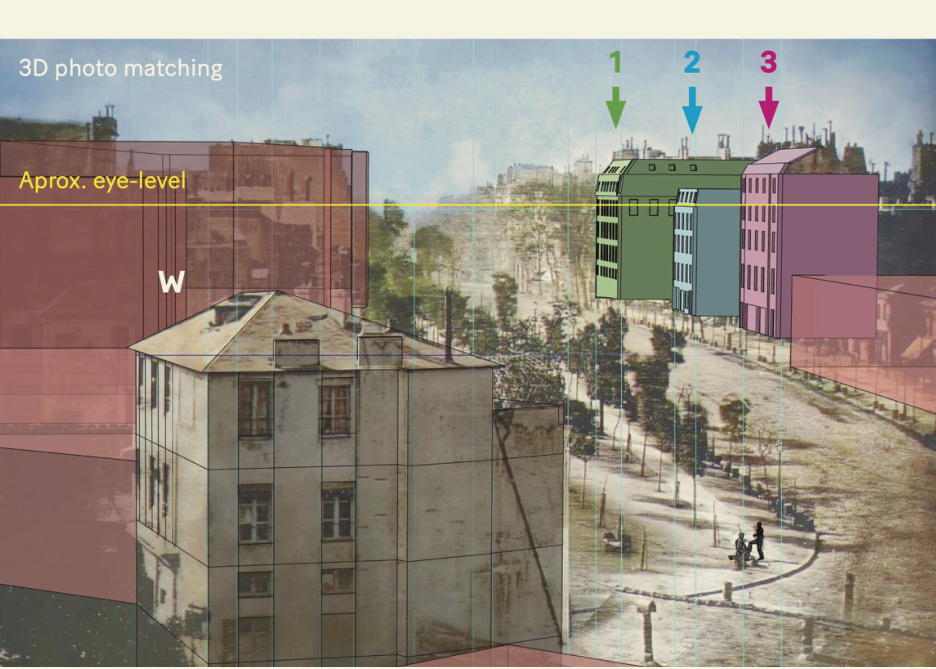
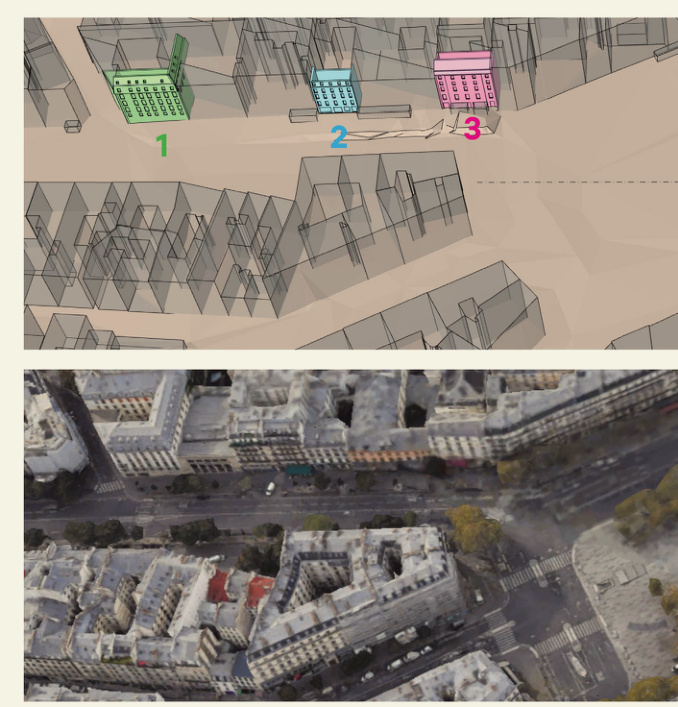
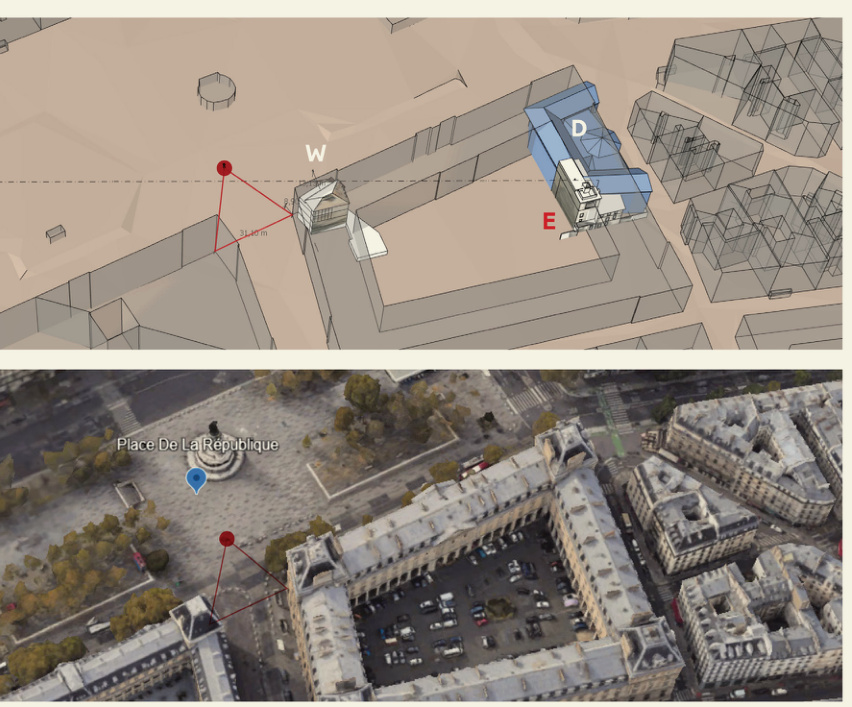
In 2025, two architecture firms, Rumlab in Sweden and Mater Studio in France, were able to determine the spot where the bootblack and his customer stood, using plans, engravings and a 3D scan of the entire neighbourhood. Three buildings on the Boulevard du Temple visible in Daguerre’s image are still standing today. They played an important role in determining this location.
Calculations and visualisations of the site by Alexander Häggström (Rumlab).
3D model of the neighbourhood created by Rumlab, with the camera’s
line of sight, compared with the present-day
Place de la République.
The plate – A timeline
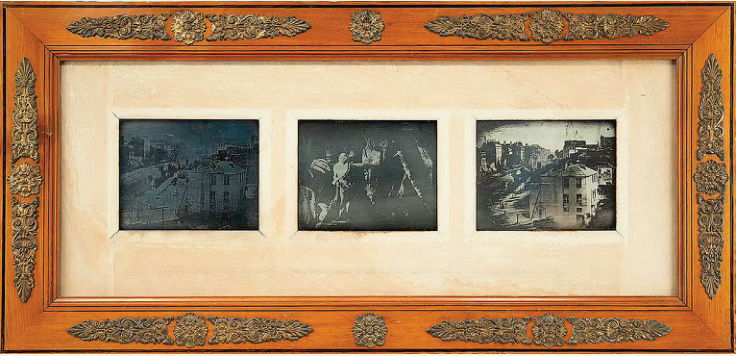
The triptych in its original frame, with the dedication to Louis I of Bavaria.
Bayerisches Nationalmuseum, Munich.
1839
Daguerre sent the plate to King Louis I of Bavaria, presented in a triptych. On the mount, he wrote:
“Print that served to establish the discovery of the Daguerreotype, offered to His Majesty the King of Bavaria by his very humble and very obedient servant, Daguerre.”
1874
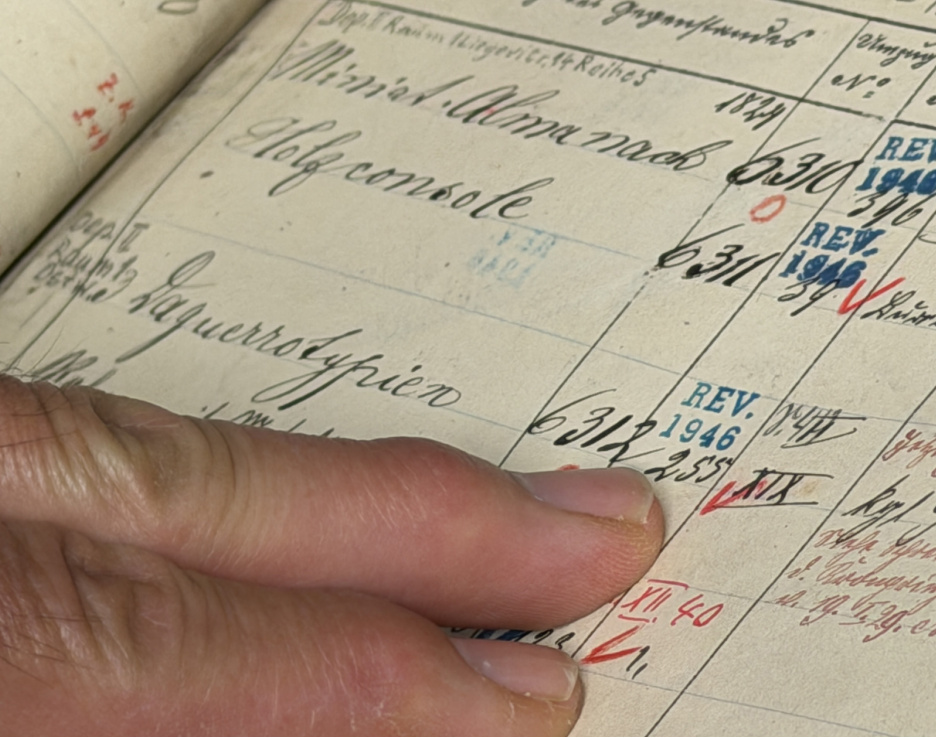
After the death of Louis I in 1868, the triptych joined the king’s other possessions in the collections of the Bavarian National Museum, recently built in his honour. In the museum registers, the image is listed as “Street in Paris”.
1936
Beaumont Newhall, a librarian at MoMA in New York, commissioned a glass negative of the image for an exhibition on the history of photography. This was the only reproduction made directly from the original plate before its deterioration. The negative has since disappeared without a trace.
1944
During the Second World War, the Bavarian National Museum was heavily damaged. On 25 April, British and American aircraft dropped 162 incendiary bombs on the building.
1945
After the war, the triptych’s plates were examined and documented. Poorly preserved, they were severely degraded and showed extensive corrosion and oxidation.
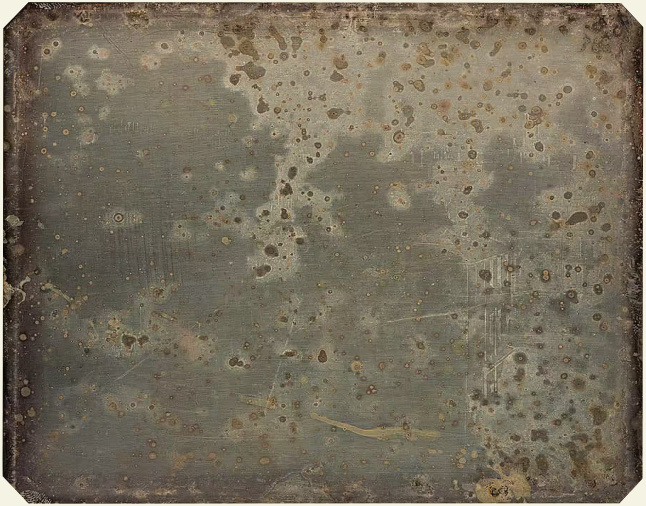
The original plate after the 1974 restoration attempt.
1974
A restoration attempt turned into a disaster and completely erased the image from the plate.
“There is neither a restoration report nor photographic documentation. One of those responsible has died; the other no longer remembers what was done.”
Excerpt from “Das Münchner Daguerre-Triptychon”, Ulrich Pohlmann and Marjen Schmidt, 1994.
2026
“In recent years, there have been many discussions about techniques that might make it possible to render the original image legible again, but no such analysis has yet been carried out.”
Dr Matthias Weniger, Bavarian National Museum
Research continues to assess the condition of the original plate and to locate the glass negative.
Point zero
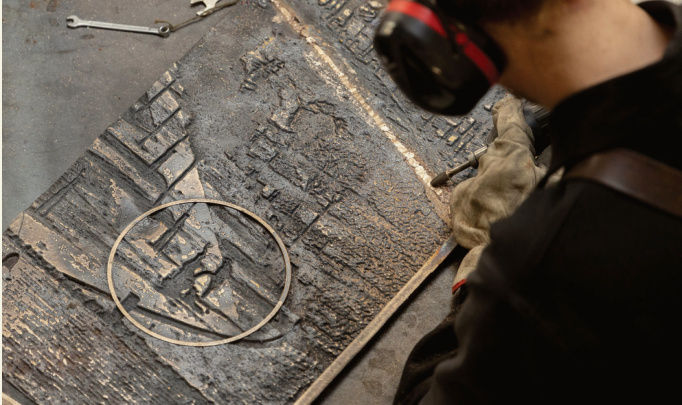
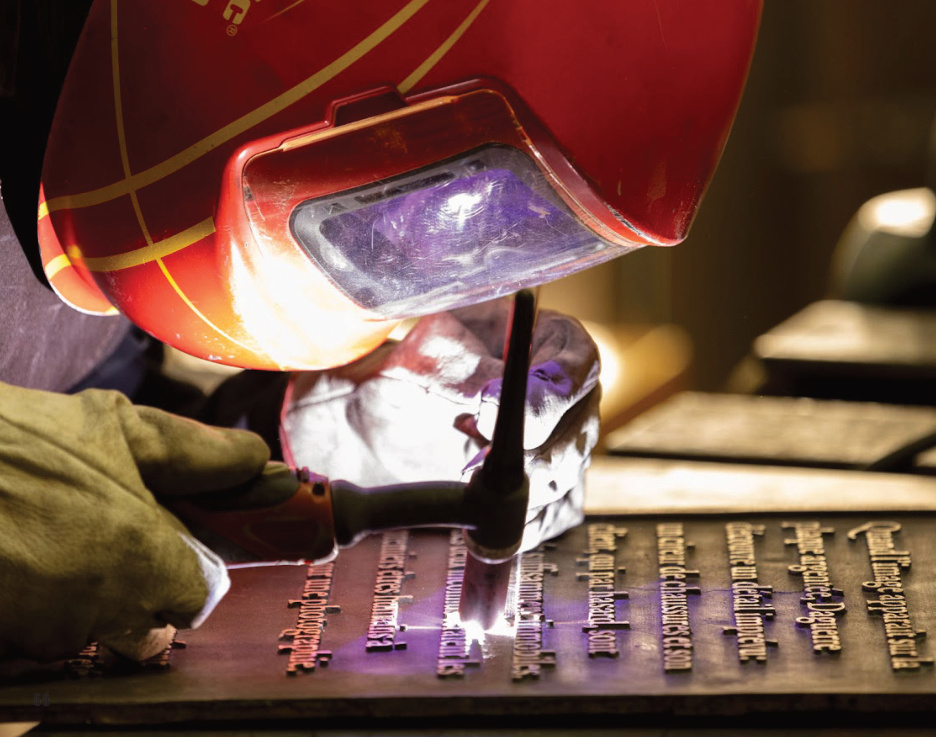
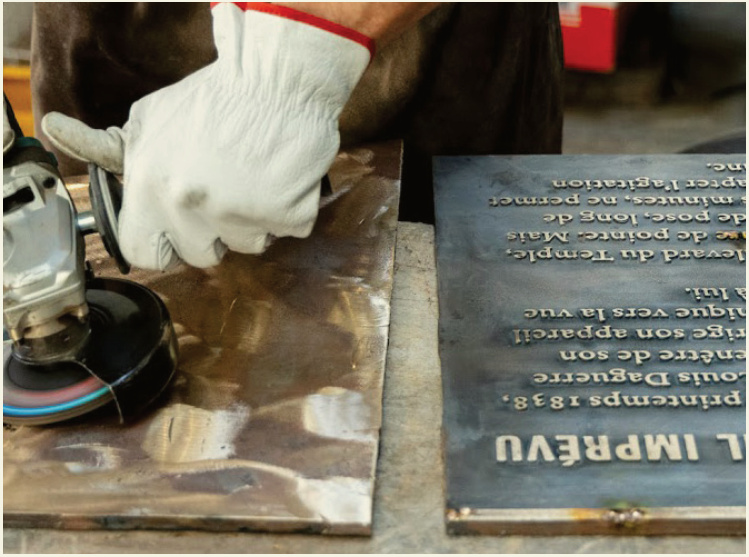
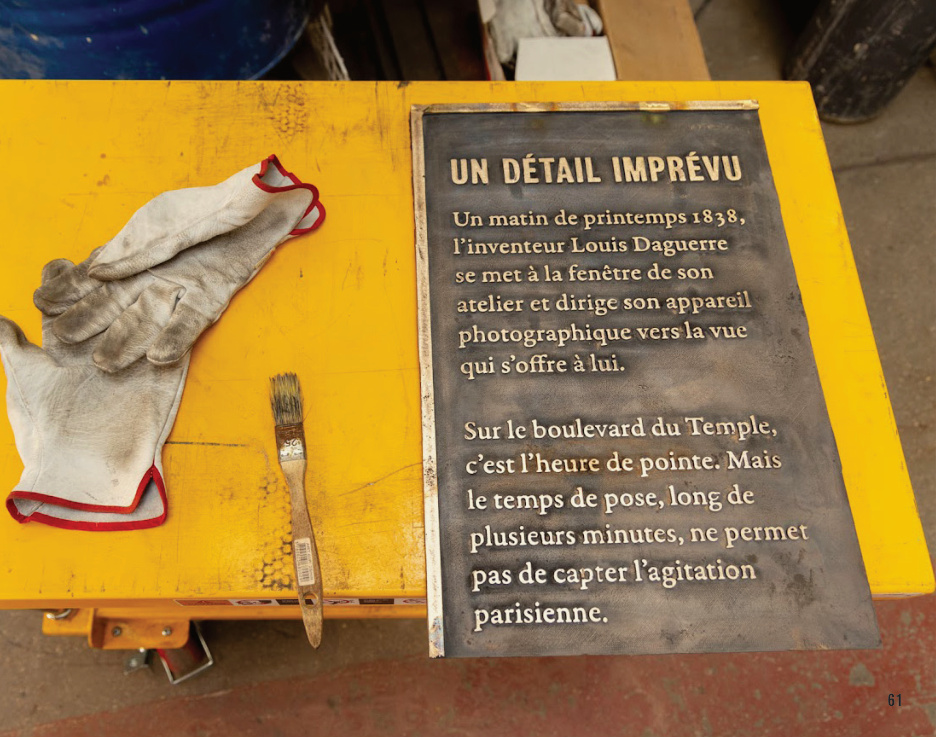
Our investigation into Daguerre’s image takes us back to an era marked by technological upheavals comparable to those we are experiencing today. In a world where images are generated by AI and feeds are driven by algorithms, this project seeks to better understand how images are created, viewed and how they influence us. On 15 October 2026, as part of the bicentenary of photography, a bronze plaque will be inaugurated at the spot where the bootblack and his customer stood. What was a street corner in 1838 is today part of the Place de la République.
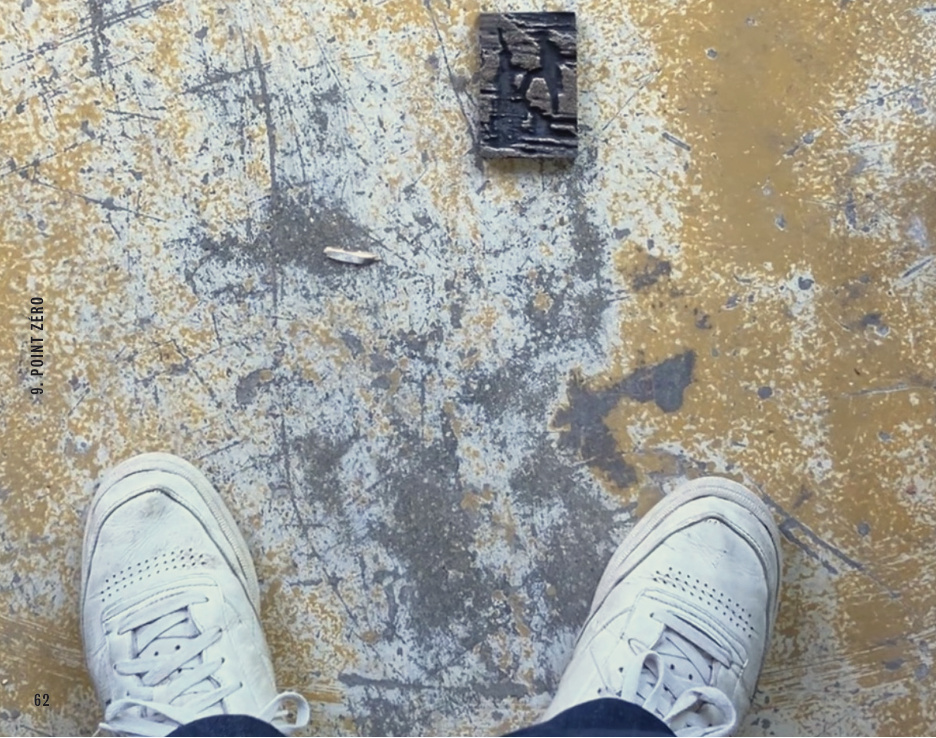
By marking the exact spot with a bronze plaque, we want to create a Point Zero* of human presence in the history of photography.
* The Zero Point of Paris is a marker in front of Notre-Dame, from which distances between Paris and other cities in France are calculated.
The project
Credits & acknowledgements
A project by Kalle Boman, Axel Danielson and Maximilien Van Aertryck.
With the support of the Hasselblad Foundation, Visuellt Center / Jönköping Region,
Lion Hill Production, Plattform Produktion and Mandé.
In collaboration with the City of Paris, as part of the Bicentenary of Photography.
In collaboration with · Acknowledgements
The City of Paris. The Department of Cultural Affairs of the City of Paris.
Alexander Häggström — Rumlab. Charles Freudiger, Léa Matay — Mater Studio. Dr Matthias Weniger — Bavarian National Museum. Margaud Chataignier, Marie des Rochettes — 2D / 3D design.
Elvin Odelholm — graphic design
Brut de Fonte — foundry. CentralPose — installation.
Tendo — fresco
Elin Boardy, Mélanie Brun, Caserne Vérines
Yves Jeuland
Florence Martin Kessler
Anne de Mondenard, Jacques Rocquencourt
Paul-Louis Roubert
Anna Sohlman
Romane Suire, Katia Van Aertryck, Astrid Söderbergh Widding
2 May 1838 – 15 October 2026
Copyright: Mandé
Graphic design: Lukas Möllersten
Printed by STIPA, 250 copies
ISBN: 979-10-448-0749-6